What is an MVR Evaporator?
An MVR Evaporator is an advanced industrial wastewater treatment system that combines the benefits of an MVR Evaporator and a High-Concentration Concentrator into a single integrated solution.
The system is specifically designed for Zero Liquid Discharge (ZLD) applications where industrial effluents contain dissolved salts, chemicals, dyes, pharmaceuticals, and other solids that need to be separated from water.
The MVR Evaporator efficiently removes water from the effluent using Mechanical Vapour Recompression (MVR) Technology, while the Concentrator further increases the concentration of dissolved solids until complete salt precipitation occurs.
As a result, salts can be easily separated from the remaining liquid phase, significantly reducing downstream drying costs and simplifying solid waste handling.
How does an MVR Evaporator work?
The treatment process begins with the evaporation of water from the industrial effluent inside the MVR Evaporator.
As water evaporates, the concentration of dissolved salts and solids gradually increases. The concentrated solution is then processed further in the integrated Concentrator section, where the solids concentration is increased beyond the saturation point.
Once saturation is exceeded, dissolved salts begin to precipitate and form solid particles. These precipitated salts can then be separated using conventional equipment such as:
- Filter Presses
- Centrifuges
- Decanters
- Drying Systems
This approach reduces the load on dryers and enables a more economical route to achieve complete Zero Liquid Discharge.
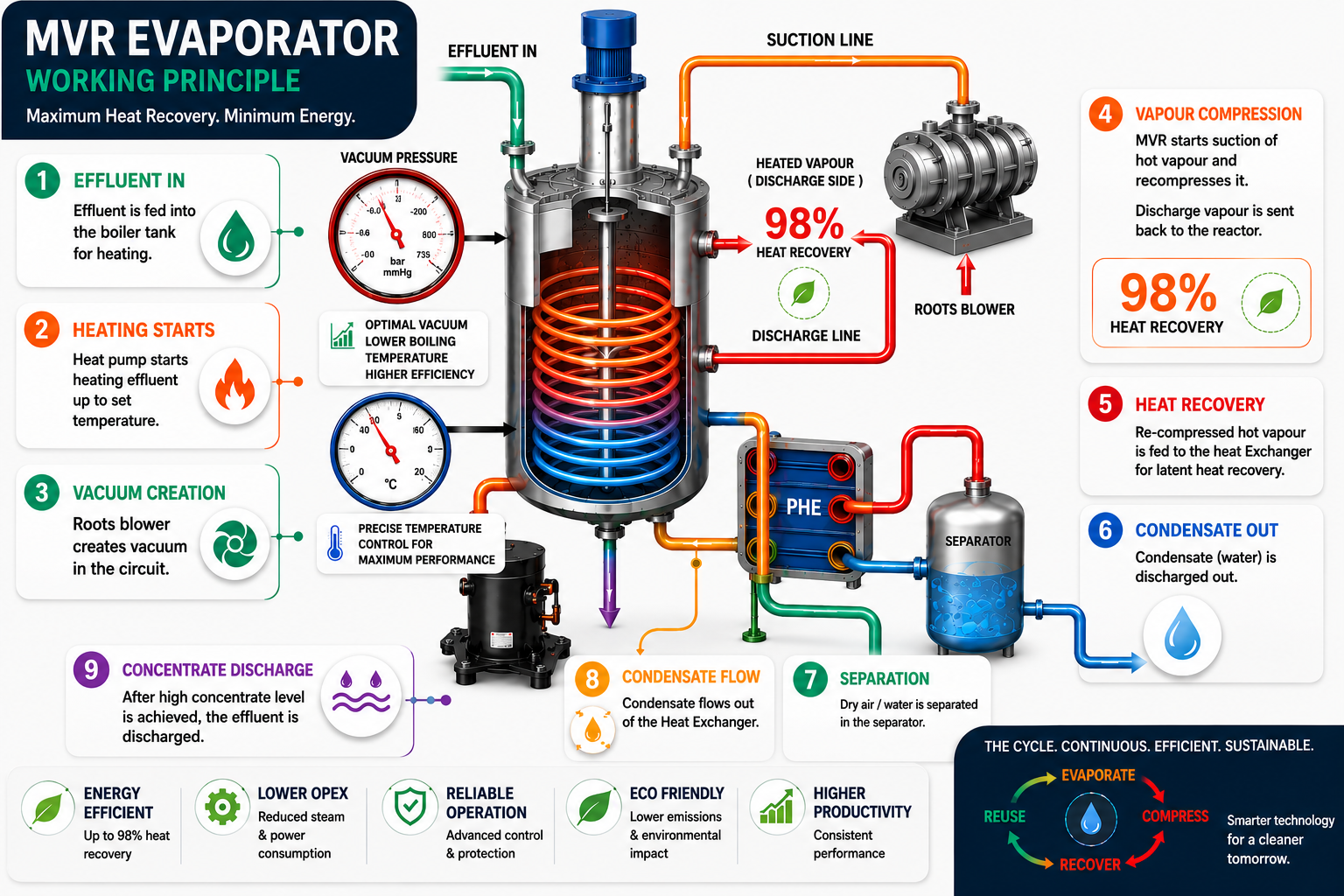
How a Reactor-Based MVR Evaporator Works – Step-by-Step Process
Step 1: Effluent Feeding
The industrial effluent is fed into the Reactor-Type MVR Evaporator tank. The reactor design provides sufficient space for agitation, evaporation, and handling of suspended solids and precipitated salts.
Step 2: Initial Heating by Inbuilt Heat Pump
The inbuilt Heat Pump starts operating and heats the effluent up to approximately 60°C. This initial heating rapidly brings the system to the desired operating temperature while eliminating the need for an external steam boiler.
Step 3: Vacuum Creation
The Vacuum Pump starts and creates vacuum throughout the entire evaporation circuit, including:
- Reactor Tank
- Heat Exchanger Coils
- Vapour Separator
- Piping Network
Under vacuum conditions, water evaporates at a much lower temperature, significantly reducing energy consumption.
Step 4: MVR Compressor Operation
As evaporation begins, water vapour generated inside the reactor rises and is drawn into the Mechanical Vapour Recompression (MVR) Compressor.
The MVR Compressor:
- Inhales low-temperature water vapour
- Compresses the vapour
- Increases vapour pressure and temperature
- Discharges the high-temperature vapour back into the reactor heat-exchanger coils
This process creates a continuous energy recycling loop.
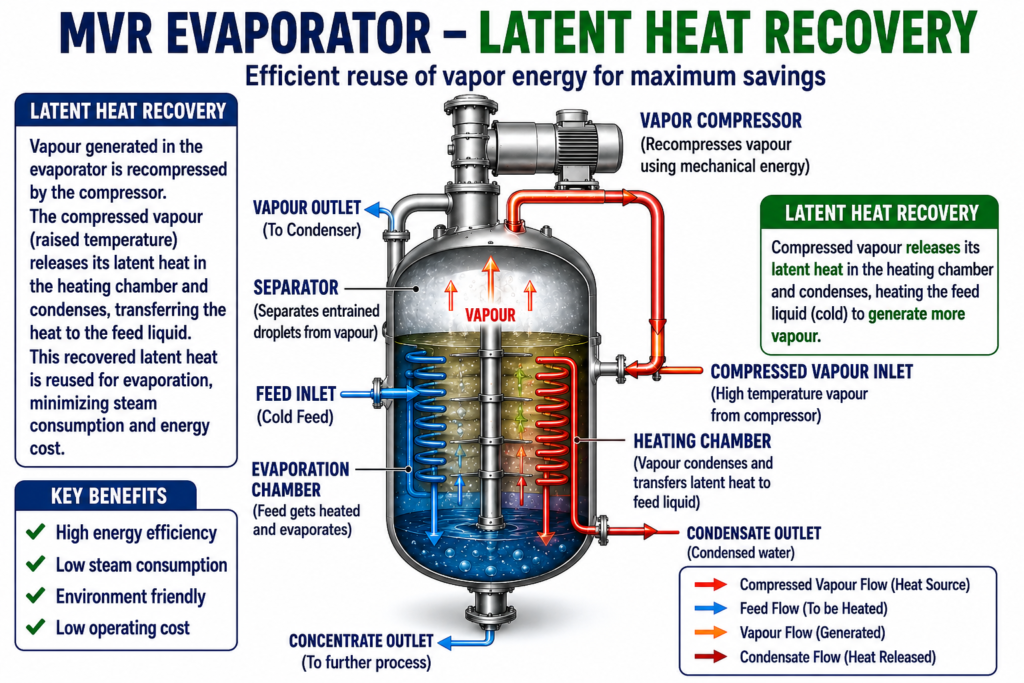
Step 5: Latent Heat Recovery and Condensation
The compressed high-temperature vapour enters the reactor coils and releases its latent heat of vaporization to the effluent surrounding the coils.
During this process:
- Vapour condenses into clean condensate
- Latent heat is transferred back to the effluent
- More water evaporates from the effluent
- Fresh vapour is generated for recompression
The condensate produced is collected and discharged through the condensate handling system.
Step 6: Removal of Non-Condensable Gases
Small quantities of non-condensable gases such as air may enter the system.
These gases are continuously:
- Separated from the condensate
- Removed by the vacuum system
- Safely discharged to the atmosphere
This ensures stable vacuum conditions and optimum heat-transfer efficiency.
Step 7: Concentration and Salt Precipitation
As evaporation continues:
- Water content decreases
- Dissolved solids concentration increases
- Density of the concentrate gradually rises
- Salts begin to precipitate once saturation is reached
The reactor-based design with continuous agitation helps keep precipitated solids suspended, minimizing scaling, choking, and fouling issues commonly seen in conventional evaporators.
Step 8: Discharge for Solid Cake Formation
Once the desired concentration or precipitation level is achieved:
- The slurry containing precipitated salts and mother liquor is discharged from the reactor.
- The slurry is transferred to a Filter Press, Centrifuge, or similar solid-liquid separation equipment.
- Solid cake is separated from the liquid phase.
- The recovered solids can be disposed of or reused depending on the application.
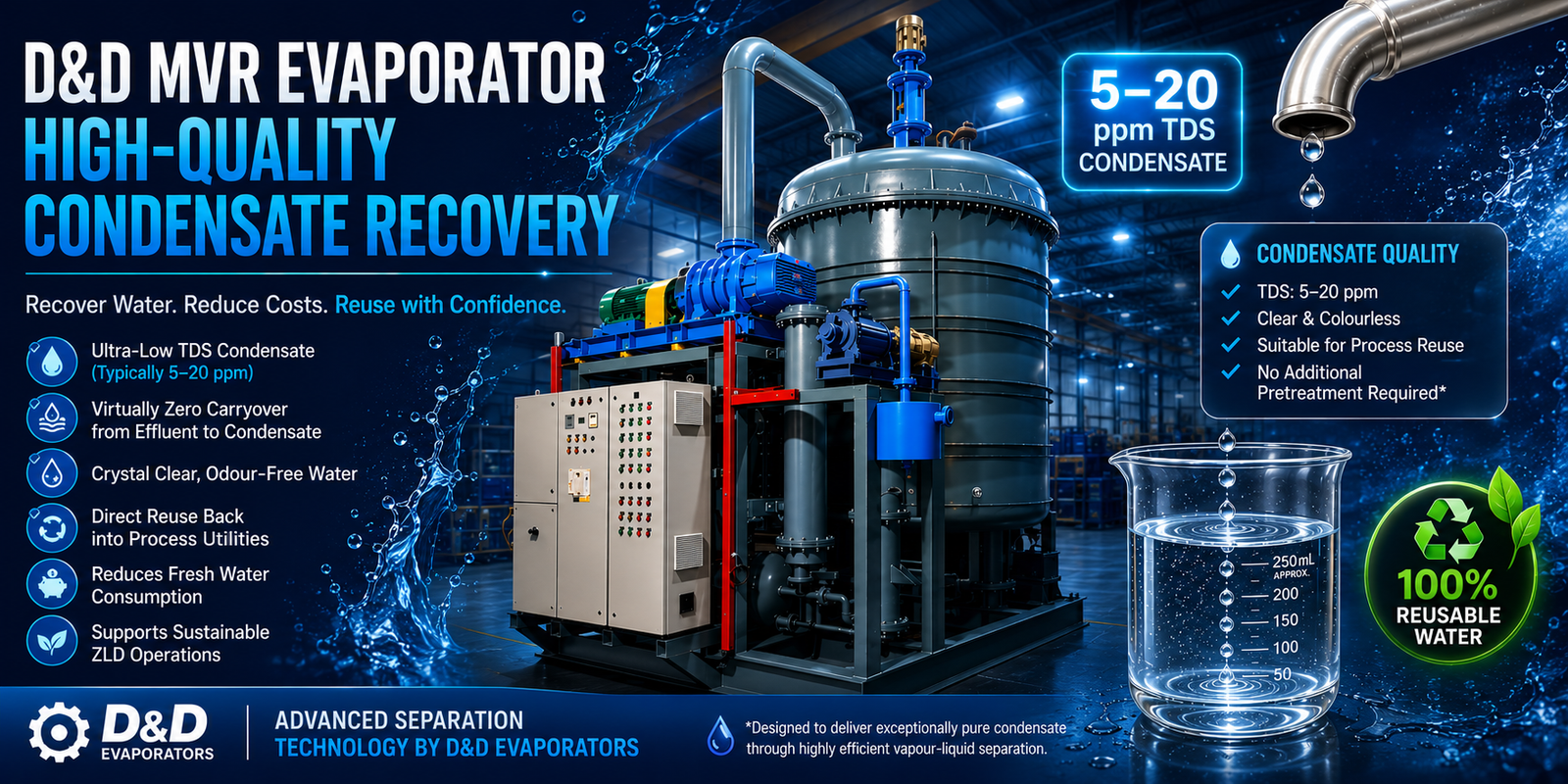
Ultra-Pure Condensate Recovery
D&D Reactor-Based MVR Evaporators are specially engineered to achieve virtually zero carryover, ensuring exceptionally pure condensate with typical TDS levels of just 5–20 ppm.
Advanced vapor separation and carryover control prevent effluent contamination of the condensate, allowing the recovered water to be reused directly in the process in many applications, with little or no further treatment.
Benefits:
✔ Condensate TDS: 5–20 ppm
✔ Near-zero carryover design
✔ Reduced freshwater consumption
✔ Lower water treatment costs
✔ Enhanced ZLD performance
✔ Maximum water recovery and reuse
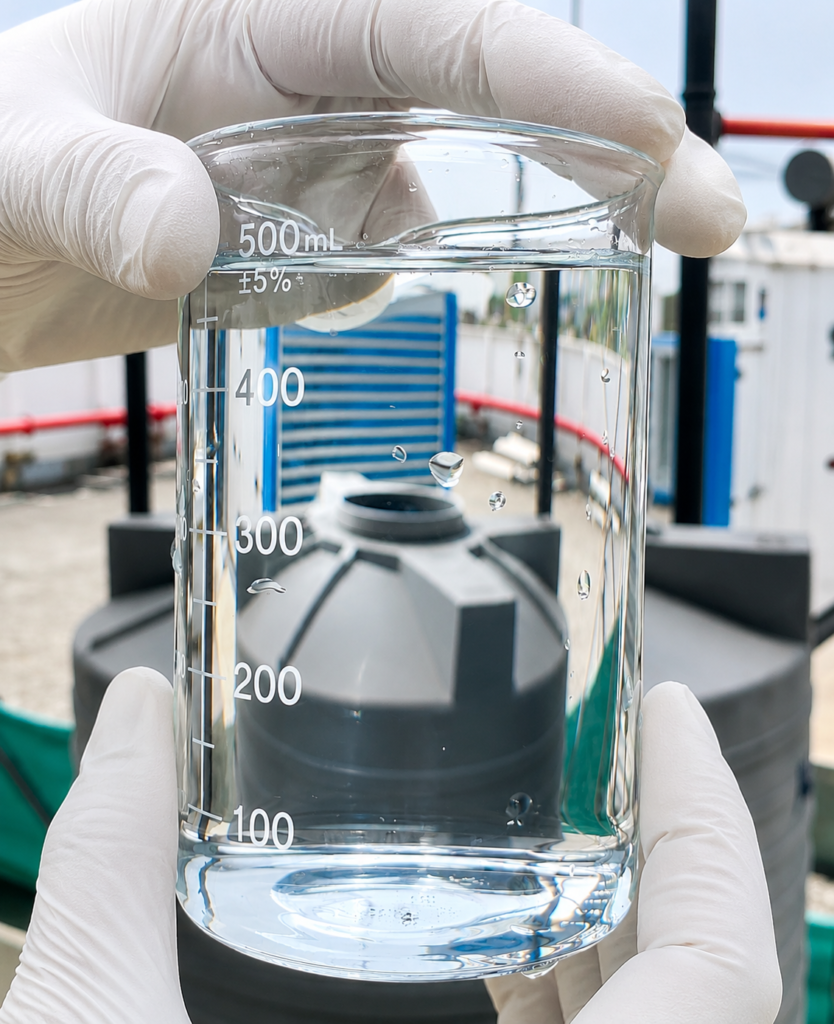
Actual Site Photo
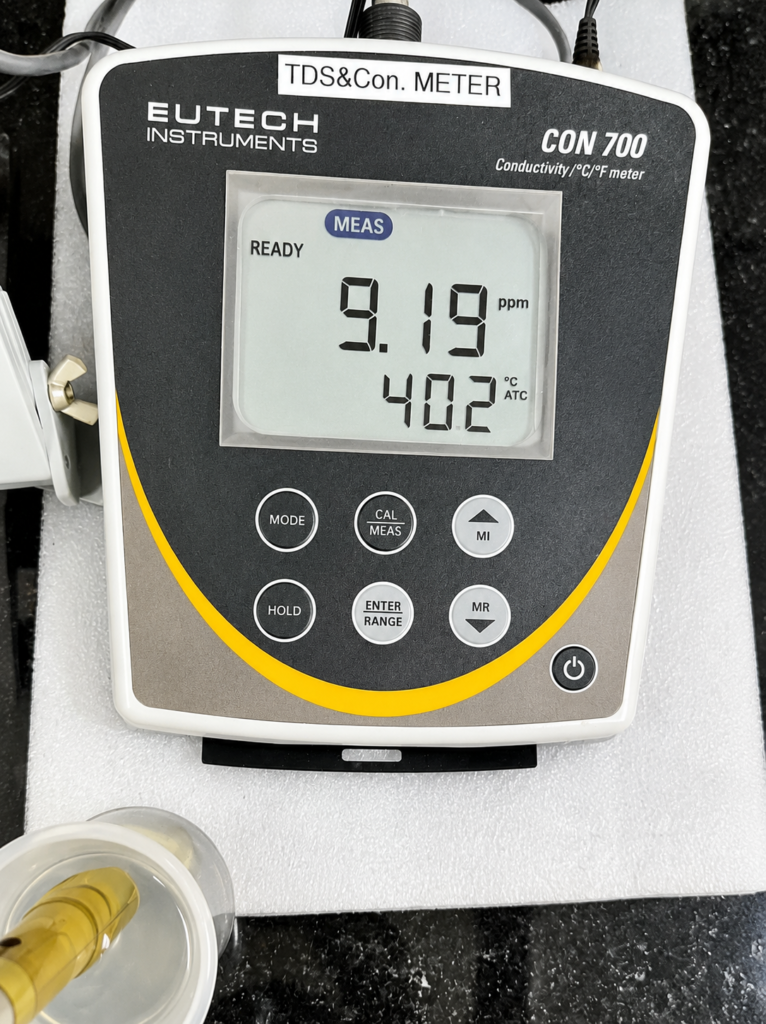
Actual Site Photo
Higher Concentration. Better Recovery.
D&D Reactor-Based MVR Evaporators are designed to achieve exceptionally high concentration levels while maintaining stable and efficient operation. The unique reactor-based technology allows the effluent to be concentrated beyond conventional limits, maximizing water recovery and significantly reducing the volume of residual waste.
By concentrating the effluent to near-complete solids precipitation, D&D Evaporators help minimize downstream processing requirements, lower disposal costs, and simplify Zero Liquid Discharge (ZLD) operations.
✔ Higher concentration ratios
✔ Maximum water recovery
✔ Reduced waste volume
✔ Lower operating costs
✔ Direct solid cake generation capability
✔ Ideal for high-salt and difficult effluents
Actual Site Video
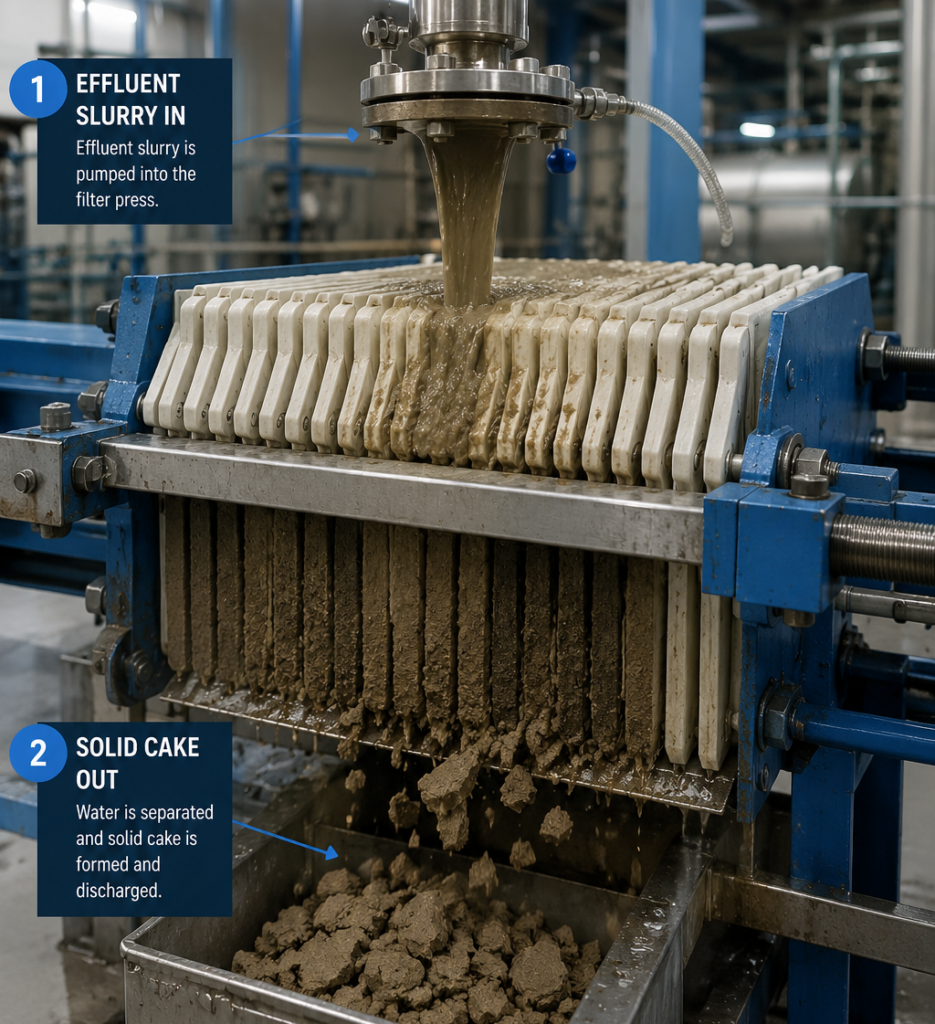
Higher Concentration. Better Recovery.
D&D Reactor-Based MVR Evaporators are designed to achieve exceptionally high concentration levels while maintaining stable and efficient operation. The unique reactor-based technology allows the effluent to be concentrated beyond conventional limits, maximizing water recovery and significantly reducing the volume of residual waste.
By concentrating the effluent to near-complete solids precipitation, D&D Evaporators help minimize downstream processing requirements, lower disposal costs, and simplify Zero Liquid Discharge (ZLD) operations.
✔ Higher concentration ratios
✔ Maximum water recovery
✔ Reduced waste volume
✔ Lower operating costs
✔ Direct solid cake generation capability
✔ Ideal for high-salt and difficult effluents
NO RECIRCULATION PUMP = NO MECHANICAL SEAL FAILURE
= NO SHUTDOWN
Low Maintenance. High Reliability.
D&D Reactor-Based MVR Evaporators are designed for minimal maintenance and maximum uptime. Routine maintenance is primarily limited to the MVR compressor and vacuum pump, involving periodic lubrication, bearing inspections, and standard preventive checks.
The biggest reliability advantage is that THERE IS NO RECIRCULATION PUMP IN THE SYSTEM As a result, the effluent never comes into contact with any mechanical seal, eliminating one of the most common causes of evaporator downtime.
This means:
- No seal damage due to corrosive or abrasive effluents
- No leakage-related shutdowns
- Lower maintenance costs
- Reduced spare consumption
- Higher plant reliability and uptime
By eliminating the recirculation pump altogether, D&D Evaporators deliver a simpler, more robust, and highly reliable evaporation system built for continuous operation.
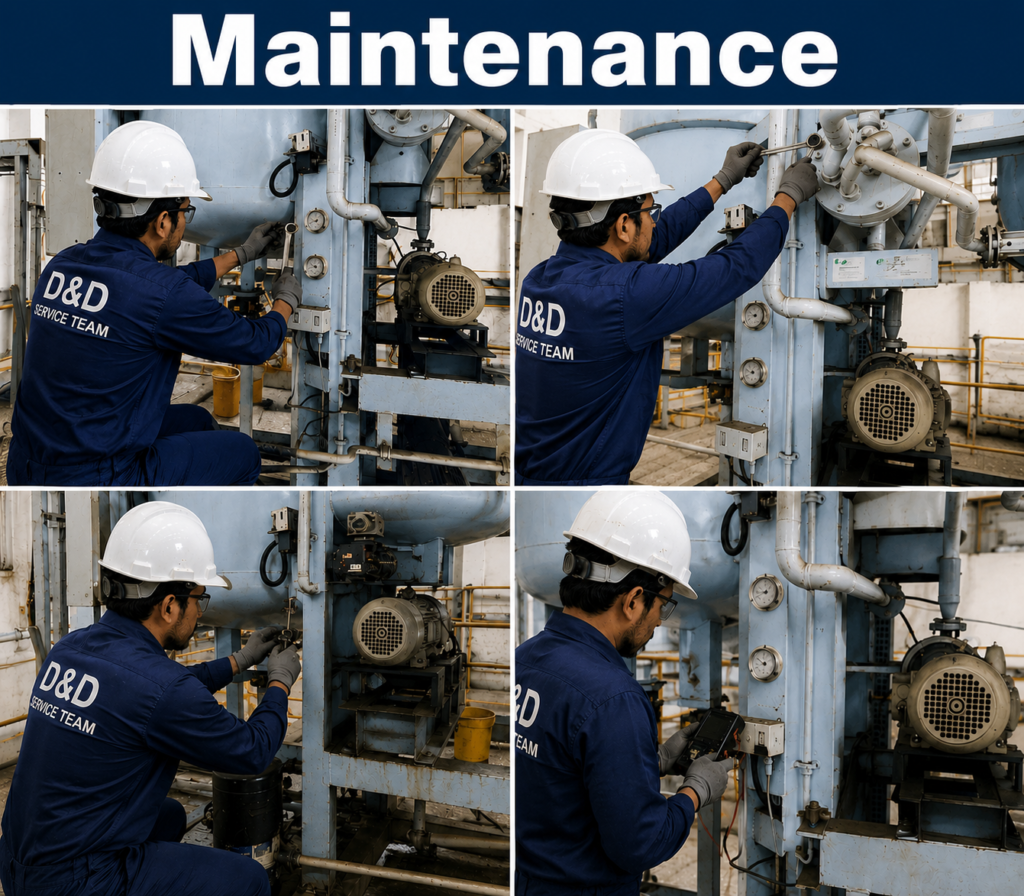
NO RECIRCULATION PUMP
= NO MECH SEAL FAILURE
= NO SHUTDOWN
Low Maintenance. High Reliability.
D&D Reactor-Based MVR Evaporators are designed for minimal maintenance and maximum uptime. Routine maintenance is primarily limited to the MVR compressor and vacuum pump, involving periodic lubrication, bearing inspections, and standard preventive checks.
The biggest reliability advantage is that THERE IS NO RECIRCULATION PUMP IN THE SYSTEM As a result, the effluent never comes into contact with any mechanical seal, eliminating one of the most common causes of evaporator downtime.
This means:
- No seal damage due to corrosive or abrasive effluents
- No leakage-related shutdowns
- Lower maintenance costs
- Reduced spare consumption
- Higher plant reliability and uptime
By eliminating the recirculation pump altogether, D&D Evaporators deliver a simpler, more robust, and highly reliable evaporation system built for continuous operation.
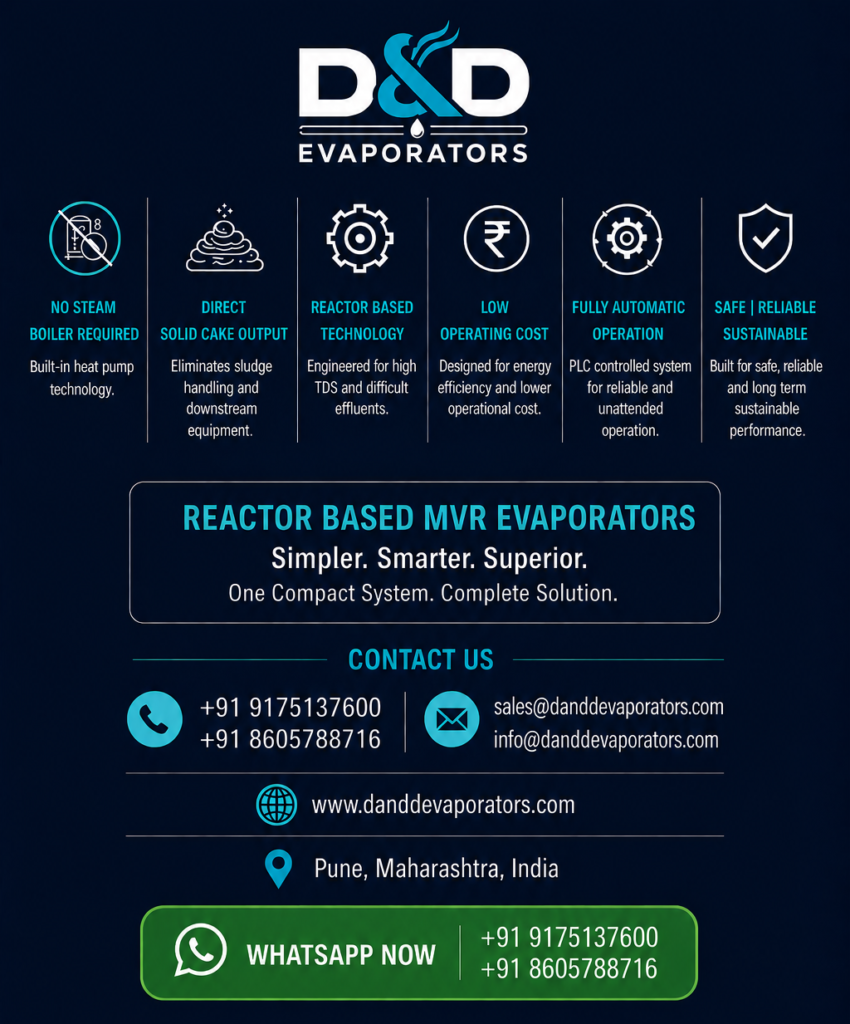
CONTACT US
+91 9175137600
+91 8605788716
www.danddevaporators.com
Pune, Maharashtra, India
FOLLOW US
NEED AN EXPERT CONSULATATION
Our Experts are here to help you find the right solution.